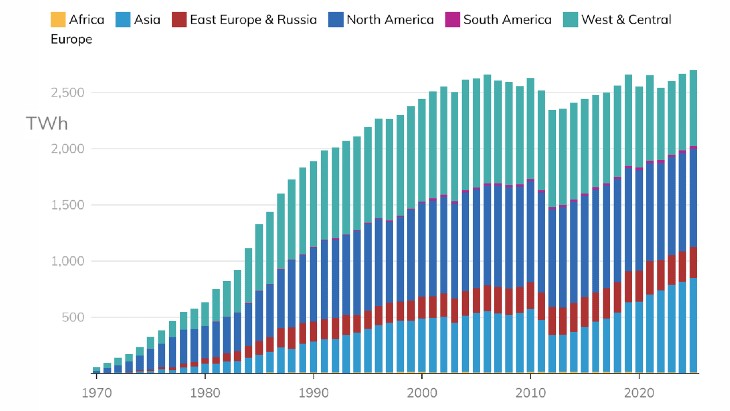
Nuclear power in the USA remains a core part of the national energy grid. Plants across the country generate high amounts of electricity every single day. The World Nuclear Association shared updated details about how these facilities operate and supply power to millions of homes.
What is Nuclear Power in the USA?
Nuclear power in the USA comes from specialized plants that split atoms to make heat. That heat creates steam, which turns large turbines to produce electricity. It is one of the largest sources of uninterrupted power in the entire country today.
Many states rely on these facilities to keep electrical grids stable during extreme weather. Unlike solar or wind, these reactors run constantly without stopping for cloudy days or calm air. This makes them a key part of daily life for families and businesses.
Why do people care about nuclear energy?
Many people care about this topic because electricity bills and power safety affect every household. Clean energy goals are very popular right now, and reactors do not burn fossil fuels to make power. People want to know if their local power supply is safe, reliable, and affordable over the long term.
The history of large ocean vessels and major historic journeys shows how human engineering has evolved over centuries. You can learn about famous historic sea travels like the Voyages of Christopher Columbus to see how past generations powered their fleets. Today, complex nuclear reactors represent the newest step in modern technology and power generation.
How does American nuclear energy work today?
The system uses enriched uranium fuel inside strong containment buildings. Operators monitor the reactors continuously to ensure safety and prevent accidents. Federal agencies enforce strict rules to make sure every facility operates without risking the public.
Here are key facts about how nuclear energy serves the nation:
- Reactors generate continuous electricity day and night.
- Facilities create zero carbon emissions during normal operation.
- Strict guidelines keep workers and nearby communities safe.
- Energy companies invest money to maintain aging plant equipment.
What should you watch for next in nuclear energy?
Engineers are working on smaller, newer reactor designs that cost less money to build. These new units can fit into smaller spaces and use modern safety systems. Leaders hope these designs will make clean electricity cheaper for towns that need extra power.
The nation will continue to balance nuclear power with other energy options. As older facilities reach the end of their planned life, lawmakers must decide whether to extend their licenses or build new ones. Public discussions will shape how much energy comes from these plants in the future.
Comments
Post a Comment